My guide, the lovely Mr. Sophea, picked me up at 7:30am and our first stop, after the ticket booth to purchase my 3 day Angkor pass, Angkor Wat, the national symbol of Cambodia. Angkor is the world’s largest religious building and is referred to as ‘Heaven on Earth’. It was built by King Suryavarman II in the early 12th century as his state temple and then mausoleum. Angkor took 35 years to complete with a workforce of 300,000 men and 10,000 elephants. The sheer size of the building, its surrounds, and the volume and intricacy of the carvings is massively impressive, but I wouldn’t call it a beautiful. I was honored to have seen Angkor Wat but left feeling like I should have been more inspired, more in awe.
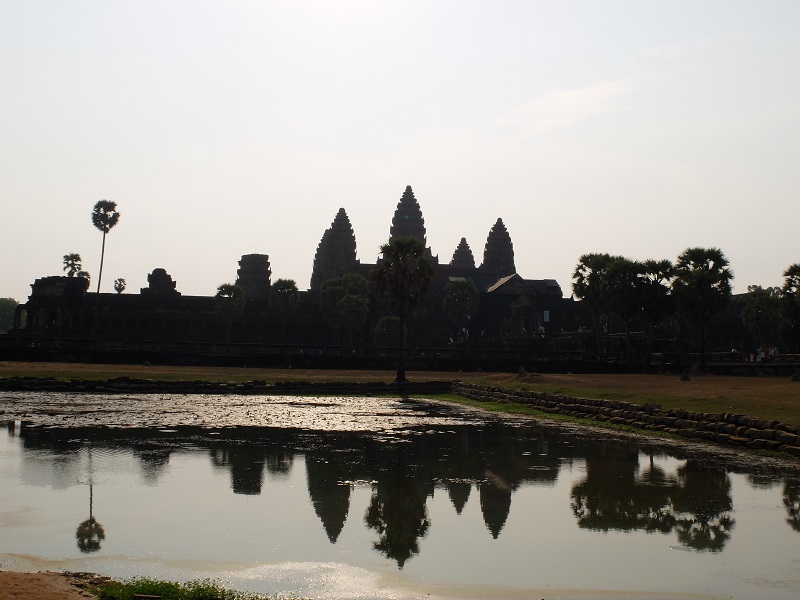
Early morning reflections at Angkor Wat.
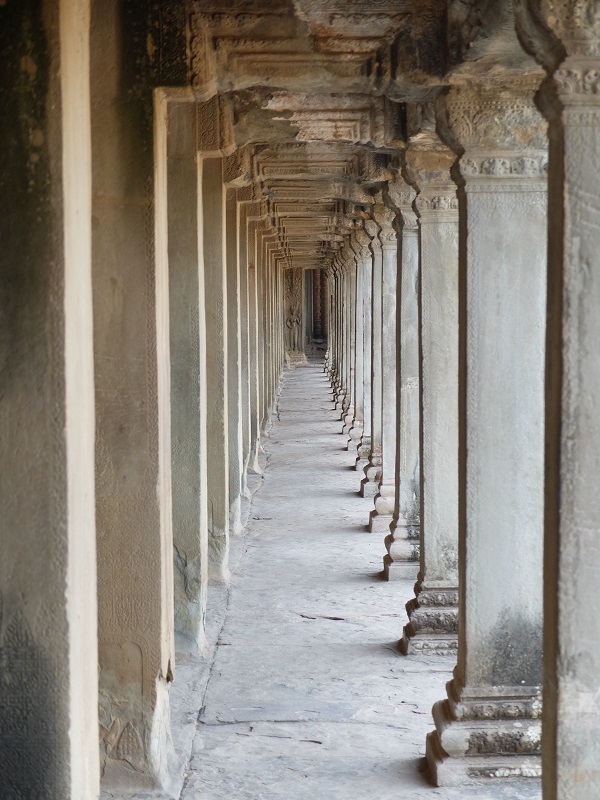
One of the many galleries at Angkor Wat.
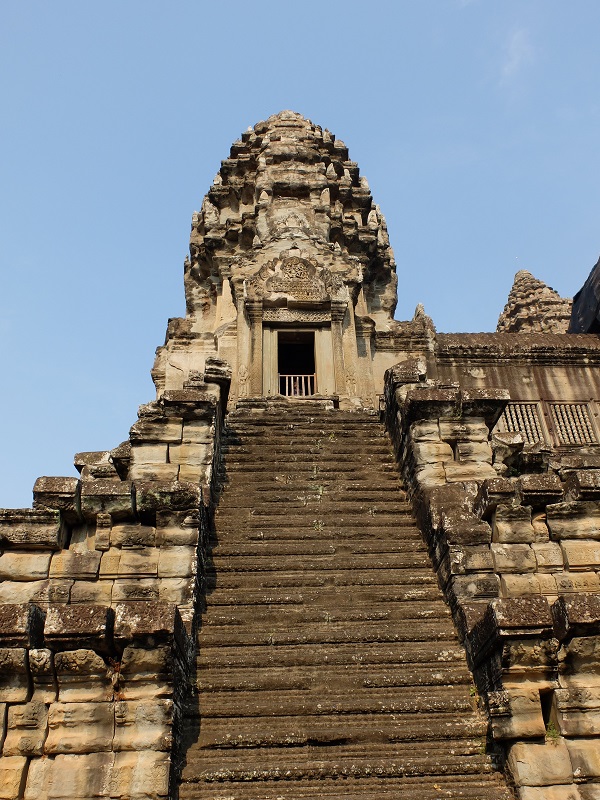
Steps up towards one of the towers at Angkor Wat. The steps are shallow and very steep resulting in a slow ascent, with a bowed head, to show reverence.
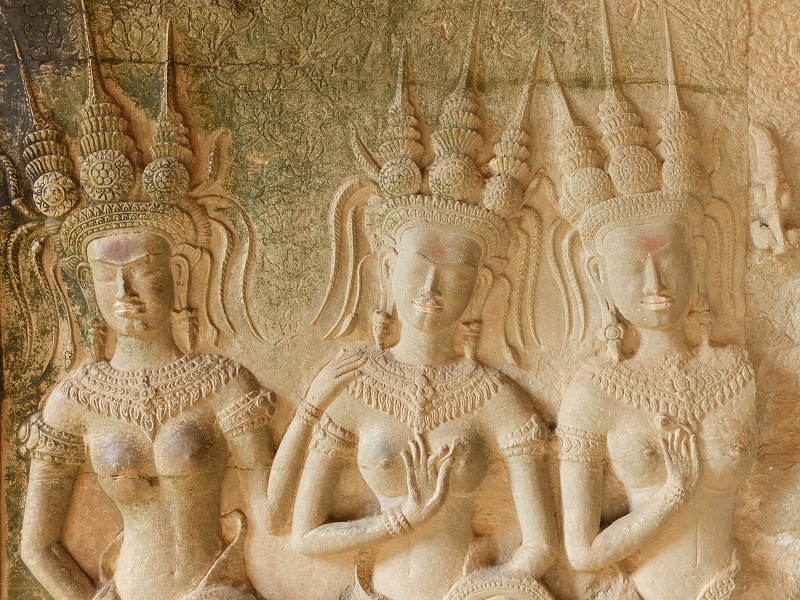
One of the many Apsaras, divine nymphs or celestial dancing girls at Angkor Wat.
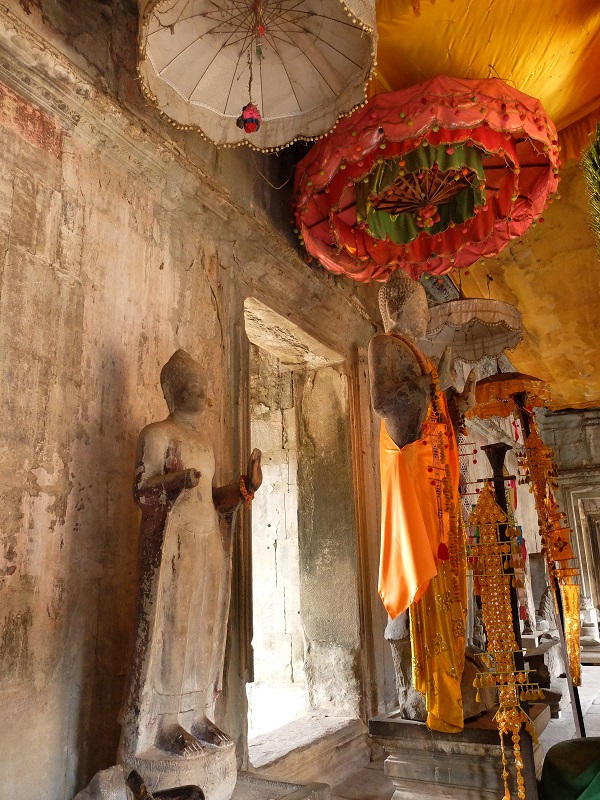
Buddha statues at Angkor Wat.
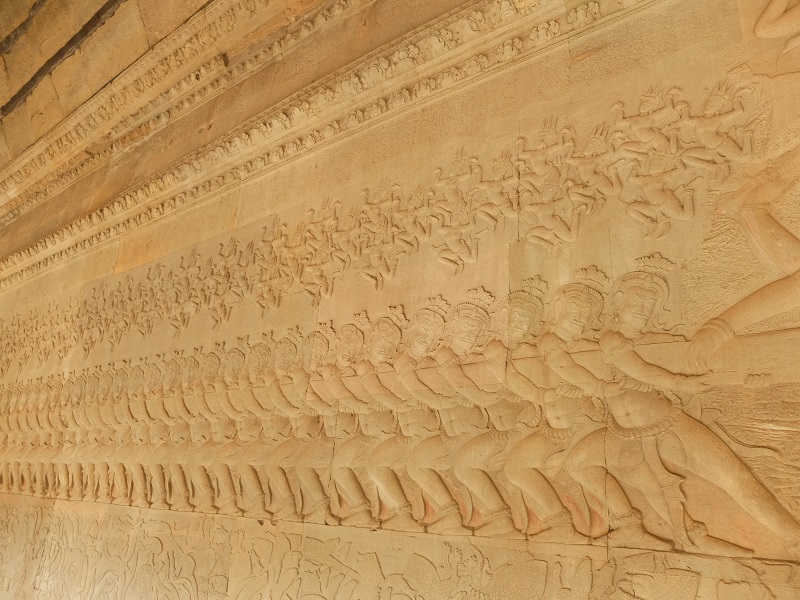
One of the bas reliefs at Angkor Wat – depicting stories from mythology or history.
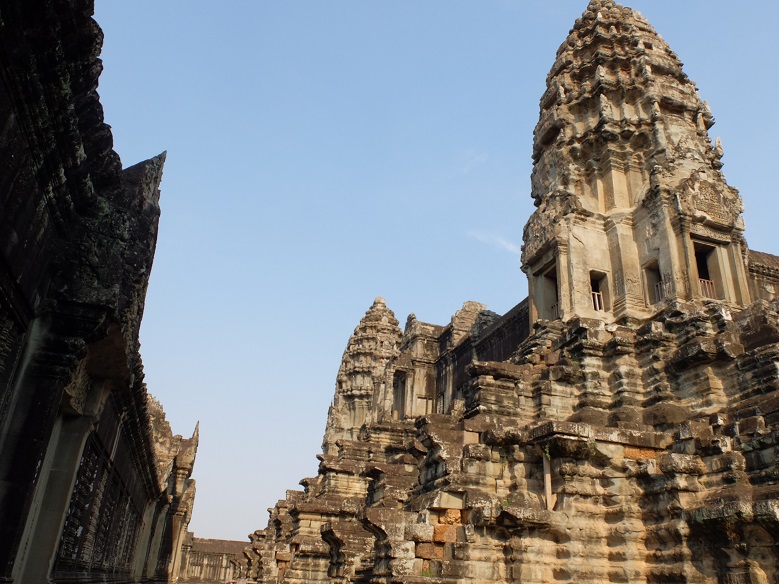
One of the towers at Angkor Wat – shaped to represent lotus flower buds.
Next stop was Ta Prohm, otherwise known as ‘The Tomb Raider Temple’. Ta Prohm was built in the late 12th century by King Jayavarman VII as a Buddhist monastery and university. The site is renowned for the fact that nature has taken over, trees, tree roots and other vegetation intertwine with the temple buildings. There was a great deal of restoration happening at the time and many areas of the temple were inaccessible due to the work. The conservation teams have the tricky task of balancing the onslaught of nature, which is a key draw card for the tourists, without compromising the health of the temple buildings. We wandered between the buildings, through the narrow corridors and clambered over rocks and ruins. Even with hoards of tourists, of which I was obviously one, you can’t help but love this atmospheric and beautiful place.
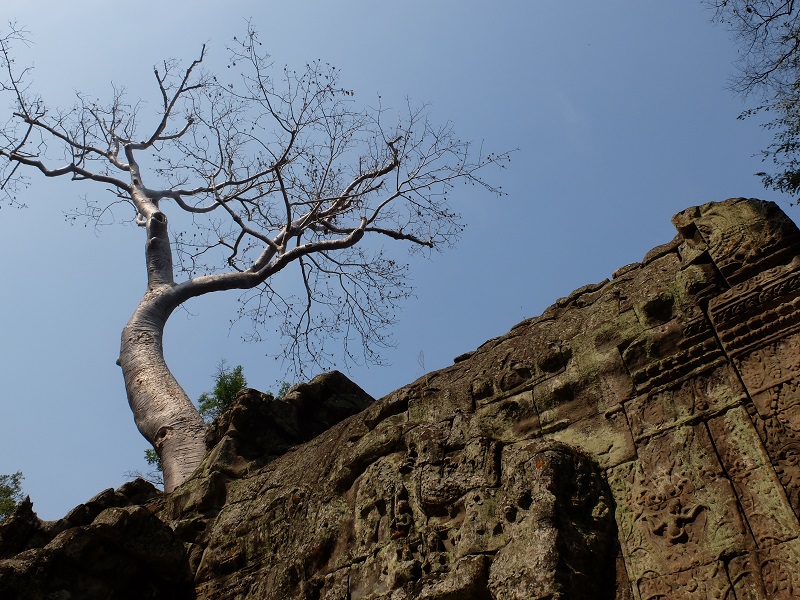
Trees and temple entwined at Ta Prohm – The Tomb Raider Temple.
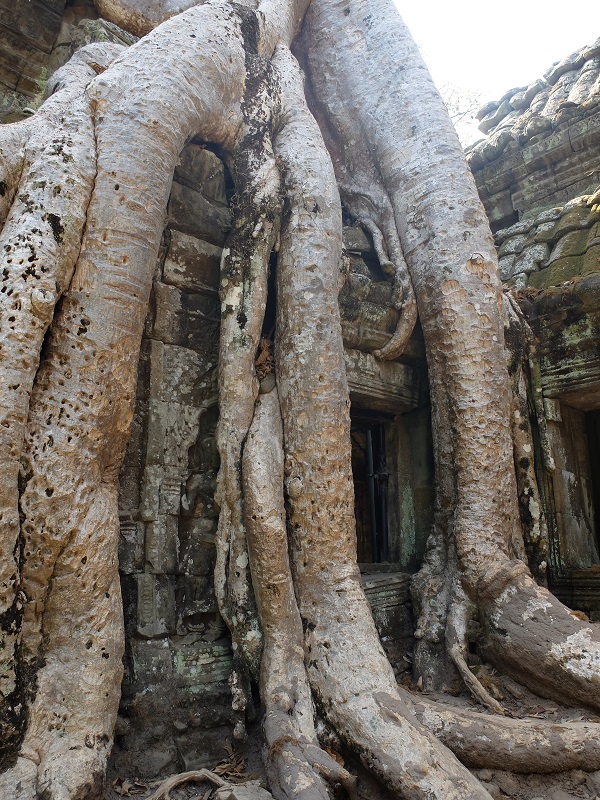
Tree roots at Ta Prohm.

Ta Prohm – the Tomb Raider Temple.

An carving of the Buddha that was modified from a carving of an apsara. Many of the temples at Angkor changed from Buddhist to Hindi temples or vice versa depending on the ruling King.
Onwards, in the heat, to Bayon. What a unique and magnificent structure! 216 carved faces stare out at you from this Buddhist shrine. According to some scholars the faces are of the Buddha but others think that they could be of King Jayavarman VII himself, looking out over his people, reminding them of his might and power. Despite the intense heat we spent a lot of time here exploring the different faces and facets of this beautiful and unique shrine and taking lots, and lots of photos!
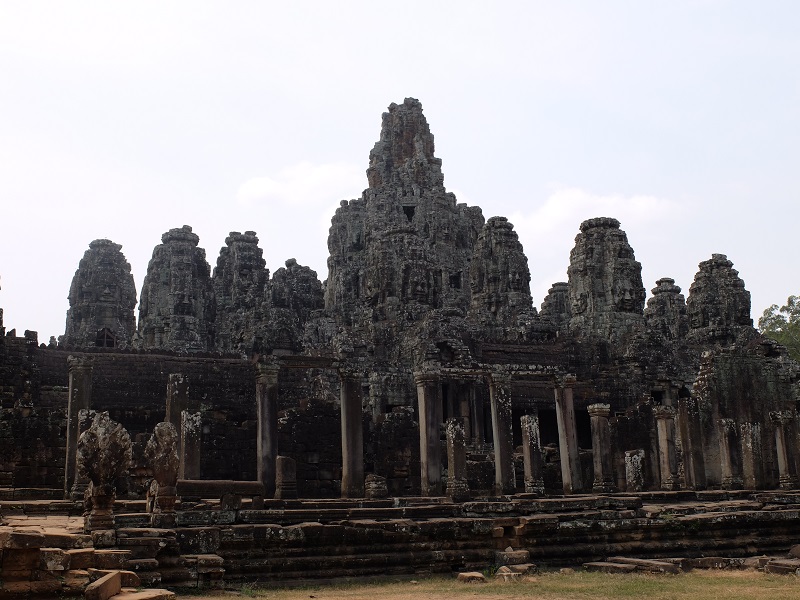
From a distance Bayon doesn’t look much, it’s when you get closer that it really comes to life.
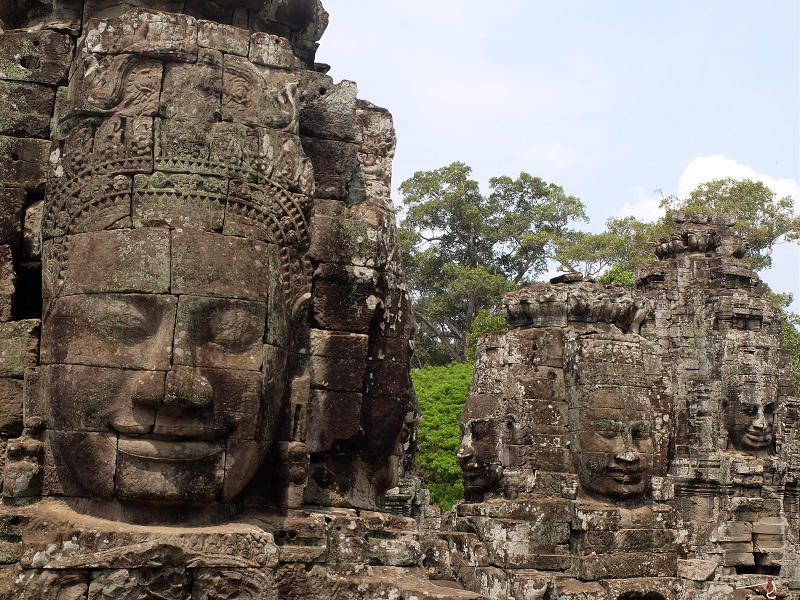
The many faces of Bayon.
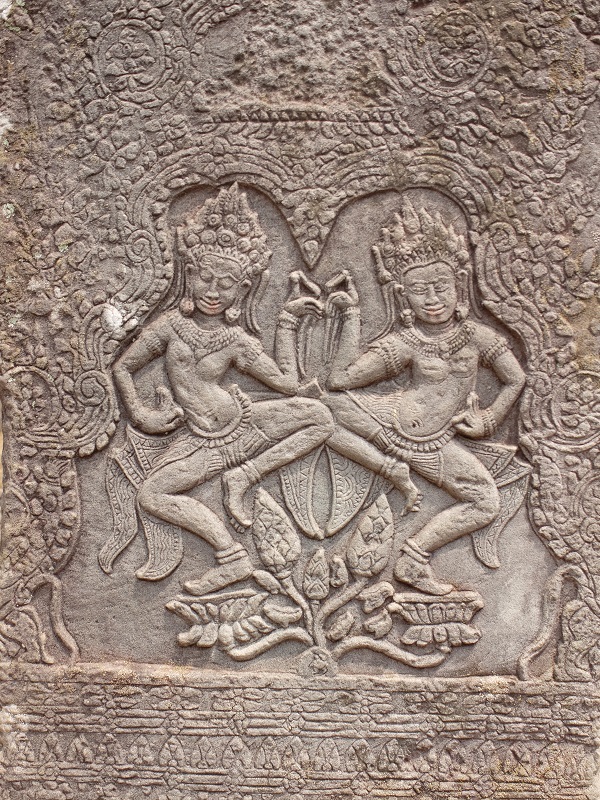
Beautiful stone carved asparas at Bayon.
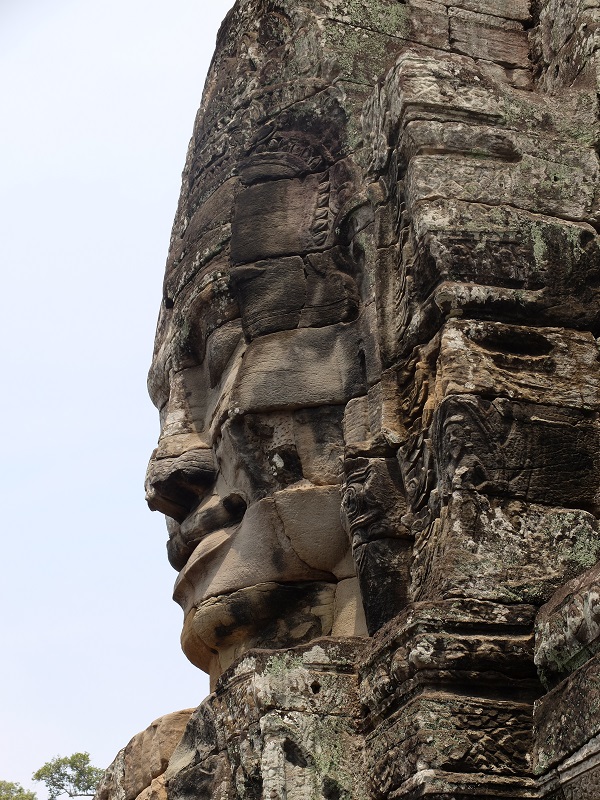
Stone faces at the mesmerising temple of Bayon.
After a much needed lunch break in some welcome shade we moved on to Angkor Thom, the last great capital of the Jaavarman VII’s Khmer empire. Established in the late 12th century Angkor Thom consists of a number of different temples and structures over an area of 9 square kilometers and includes the Bayon shrine. We explored the different temples and buildings and ended our tour walking along the Terrace of Elephants, a 350 meter long structure used as a giant viewing platform for the King’s public ceremonies and audiences.
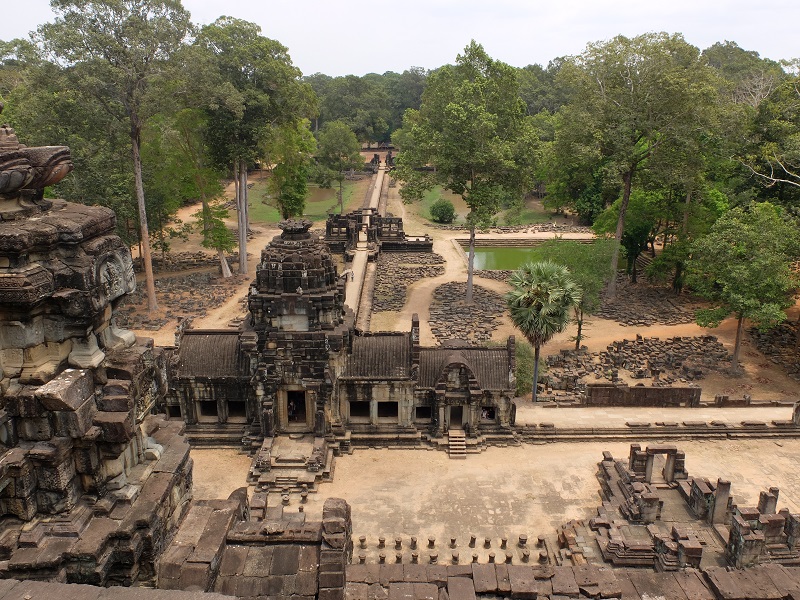
The view across Angkor Thom from the top of Baphuon Temple.
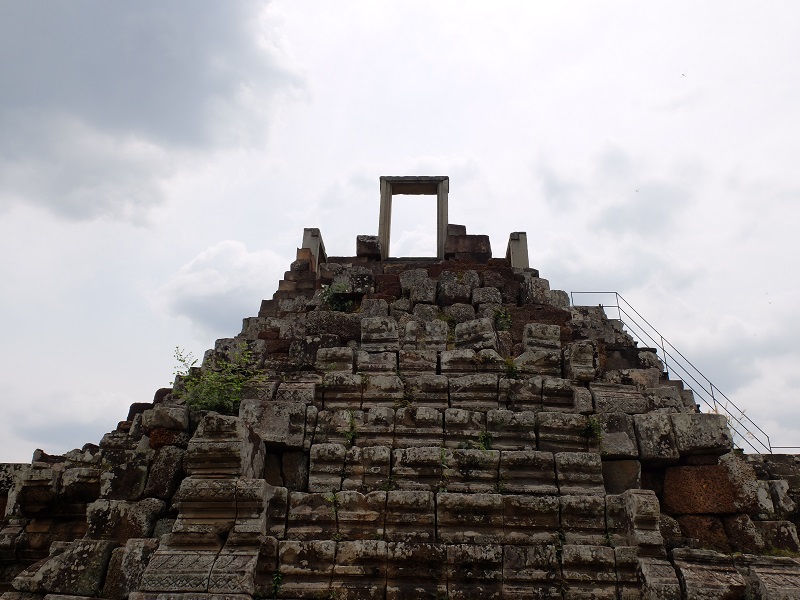
Baphuon Temple within Angkor Thom.
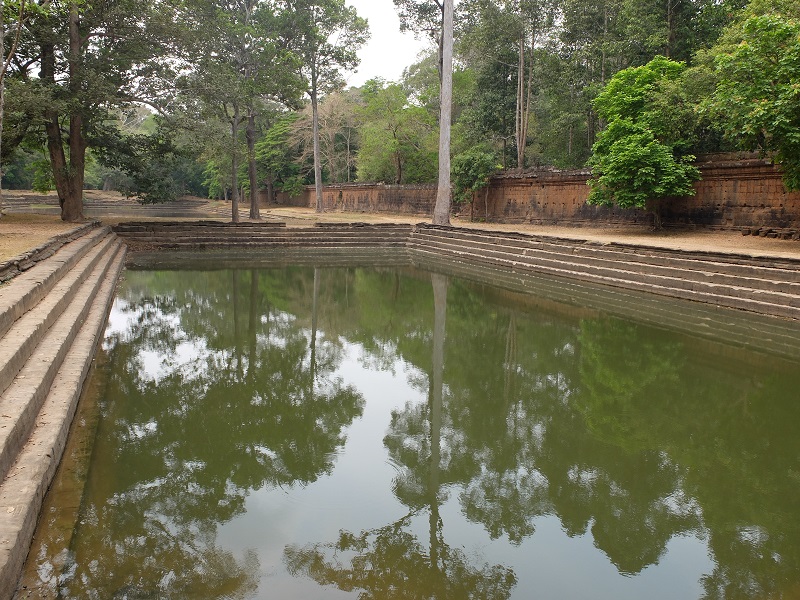
The female bathing pond at Angkor Thom.
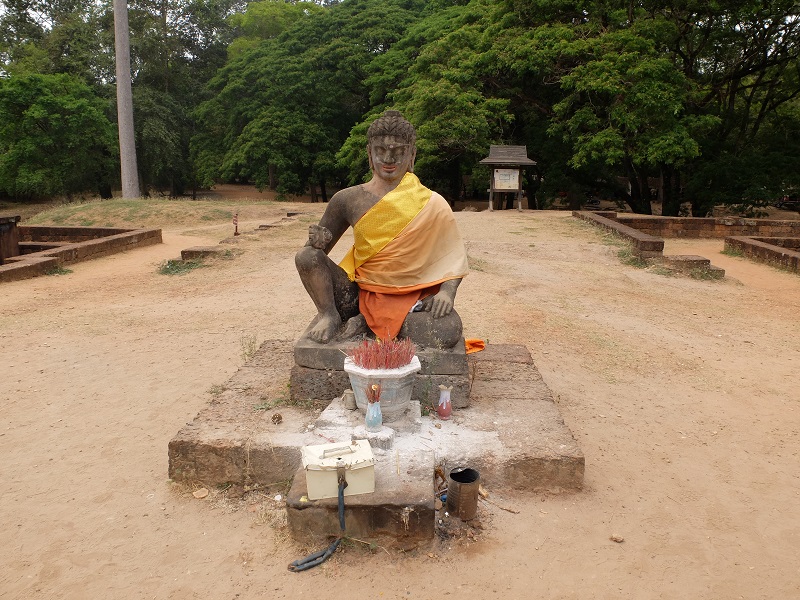
The Terrace of the Leper King in Angkor Thom.
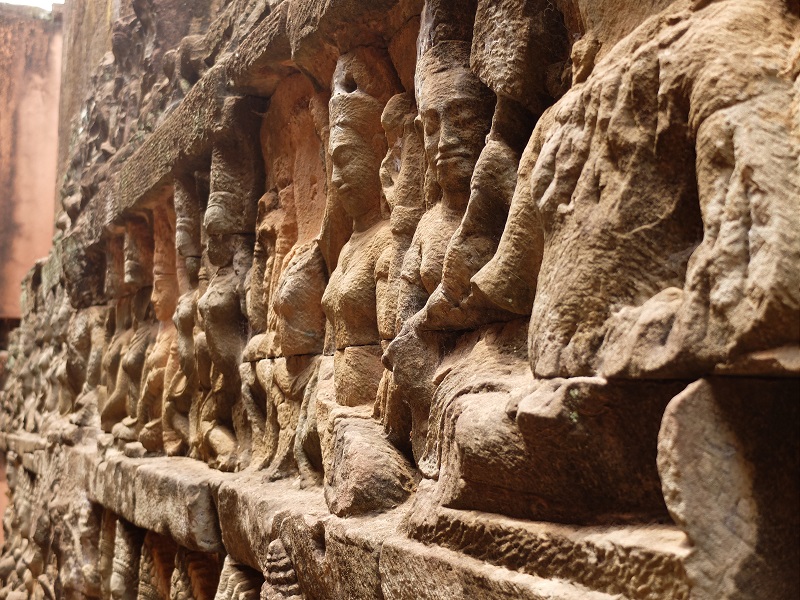
Bas relief at Angkor Thom.
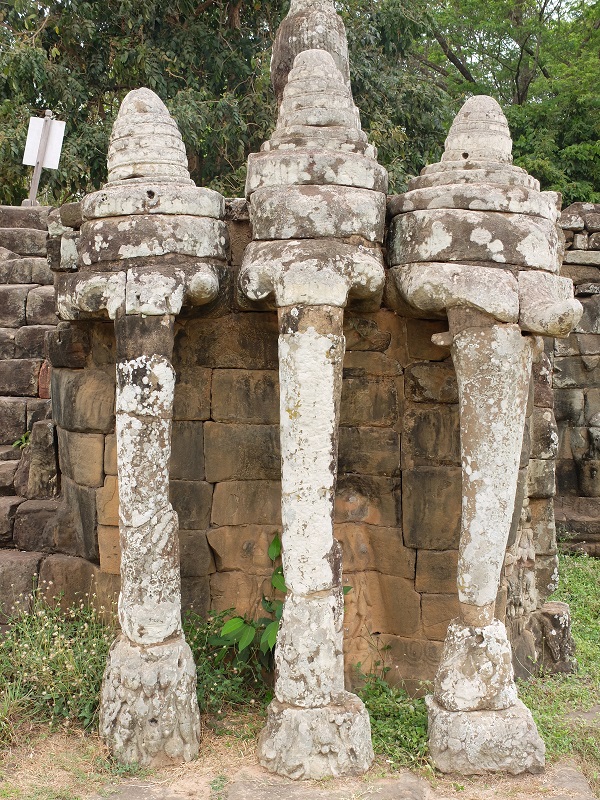
The Elephant Terrace.
And so ended my first day at the ancient city of Angkor. I was pleased with my decision to hire an official guide as the information that Sophera gave me was a great foundation for understanding the history of this epic ancient city.
 Adventures in life, travel and teaching
Looks amazing – what makes the stone black? Not pollution?
LikeLike
I think some of the discolouration is due to pollution but I don’t know for sure. See article following…https://www.cambodiadaily.com/archives/apsara-says-it-is-dealing-with-angkor-pollution-65046/
LikeLike