After a week on the beaches and islands I traveled back to Phnom Penh where I was to spend my last couple of days in Cambodia.
I decided that I would visit the Choeung Ek Genocide Centre and Tuol Sleng Detention Centre. I’d recently finished reading ‘First They Killed my Father’ by Loung Ung, a child survivor of the genocide and I felt that I wanted to understand more. I contemplated my motivations for this ‘grief or dark tourism’ however my desire was driven less by a morbid curiosity but a need to ground my experiences of this wonderful country and its people in its historical context.
Choeung Ek is located 11 miles south of Phnom Penh and is the best-known of the killing fields of which there are many across the country. During the Khmer regime over 2 million people were killed by state sponsored genocide between 1975 and 1979, nearly a quarter of the then population*. Victims included anyone remotely connected to the prior government, intellectuals and professionals (however erroneously defined) and various ethnic groups. It is thought that over 17,000 people were executed at Choeung Ek which is now the site of the national memorial for victims of the genocide.
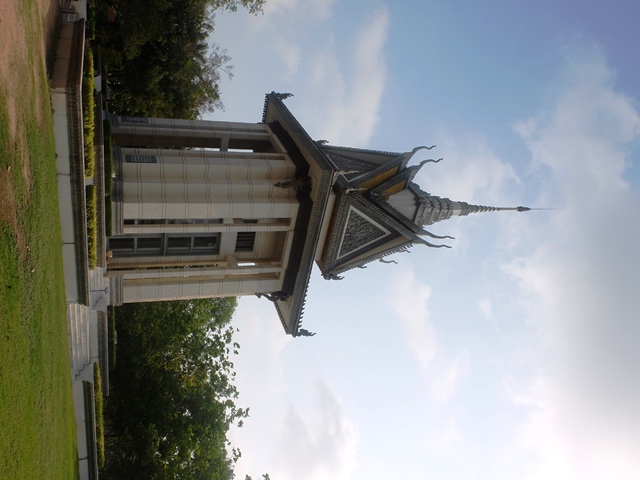
The Buddhist memorial stupa that houses the skulls and bones of victims from Choeung Ek.

Skulls from victims in the Buddhist memorial stupa at Choeung Ek.
I took the accompanying audio tour which provided details of how prisoners were processed and executed as well as first-hand accounts from prison guards and prisoners. It’s hard to describe the feeling of being in a place where so much horror and pain has been inflicted especially when there is so much physical evidence surrounding you. The main excavation of the site was conducted in the 1980s with memorials placed around key communal graves however the bones and clothes of victims continue to be unearthed over time.
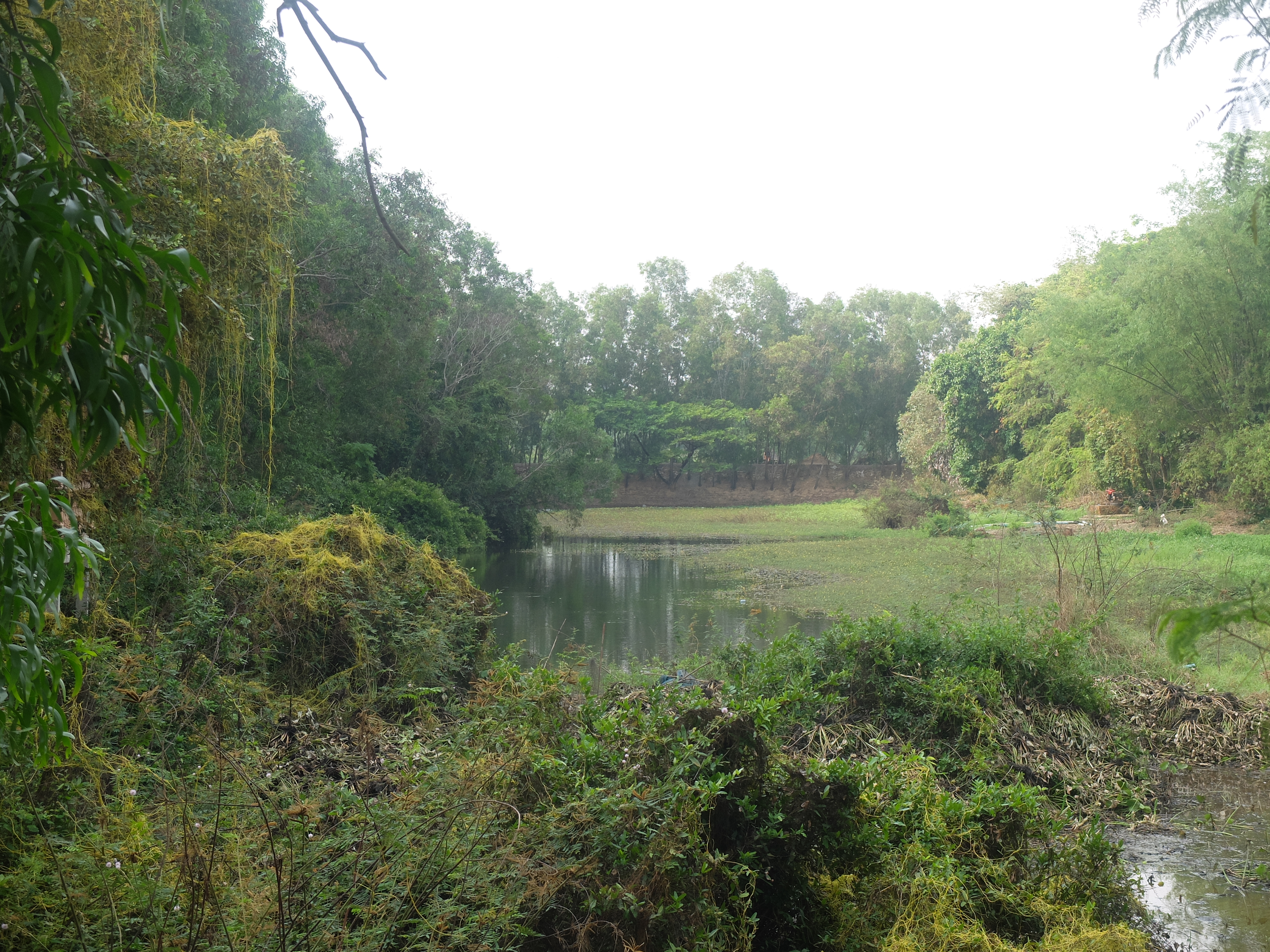
View across the lake at Choeung Ek which was an orchard prior to being used as a killing field.
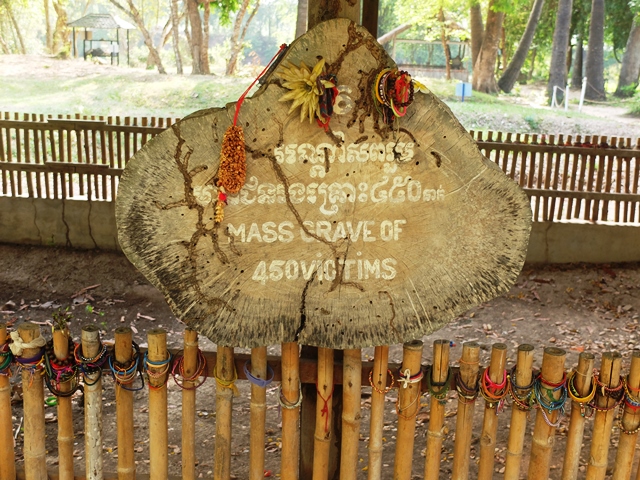
Communal grave site at Choeung Ek.
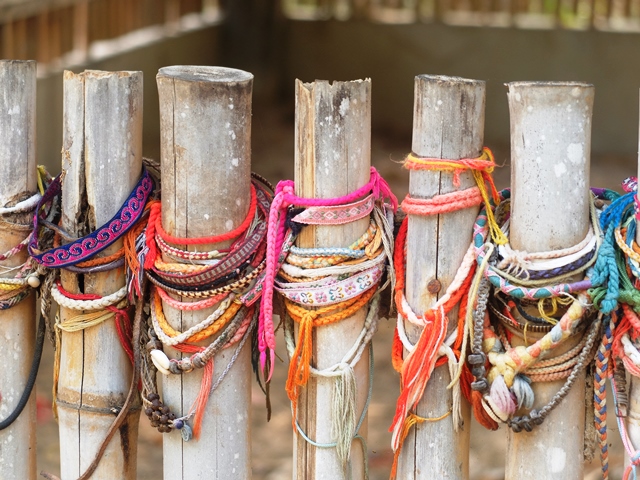
Bracelets and other memorials placed on communal graves.

I don’t think this photo needs an accompanying caption.
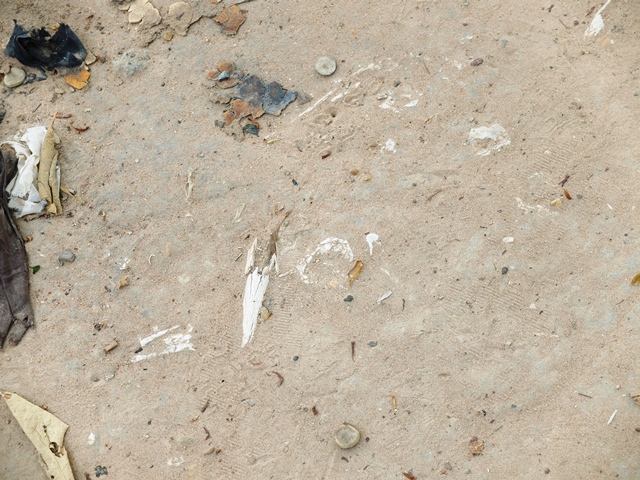
Fragments of the bones and clothes of victims unearthed on the pathways.
Tuol Sleng Detention Centre is a former high school that was used as a prison and interrogation centre known as ‘Security Prison 21’ or S-21. It is believed that between 1975 and 1979 over 17,000 people were imprisoned at Tuol Sleng. Prisoners endured on-going torture to force them to name family members or other associates, who were then subsequently arrested and tortured. Following torture, if the prisoner survived, they would be transported to Choeung Ek for execution. Of the 17,000 prisoners at S-21 there were only 12 known survivors.

The notorious Tuol Sleng prison and interrogation centre known as S-21.
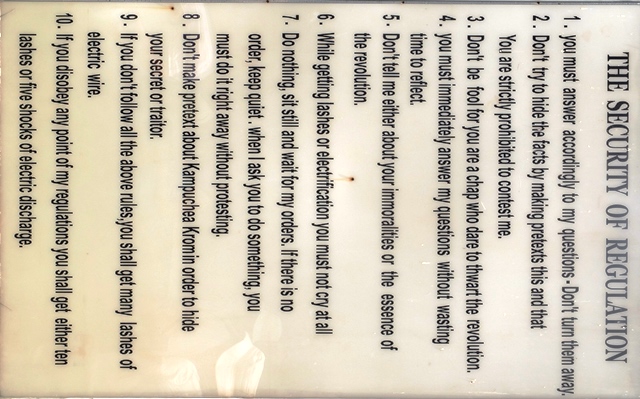
Code of conduct at Tuol Sleng Prison.
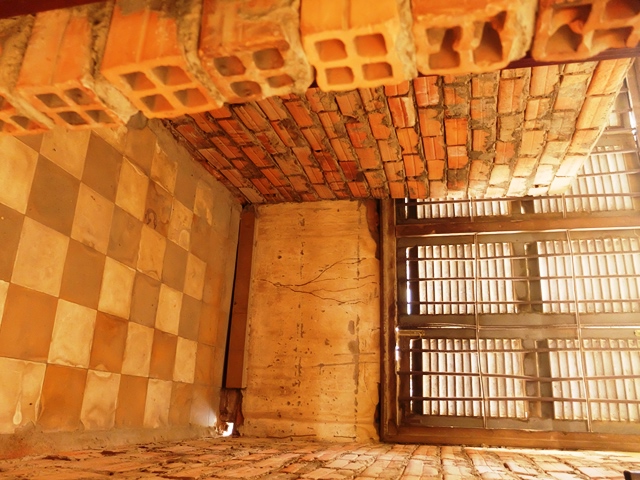
A prison cell at Tuol Sleng prison.
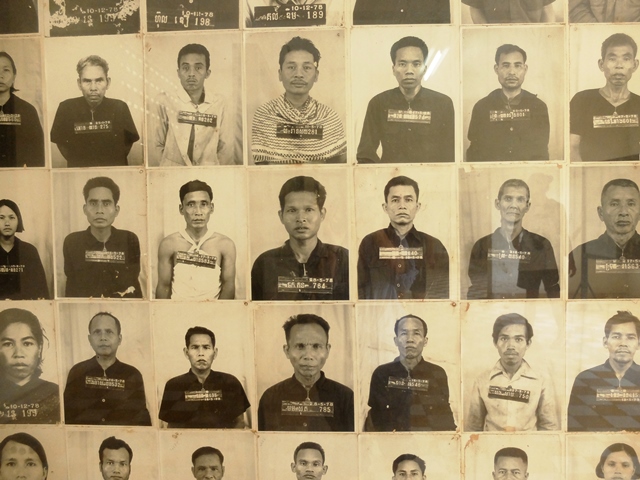
Photographs of prisoners.
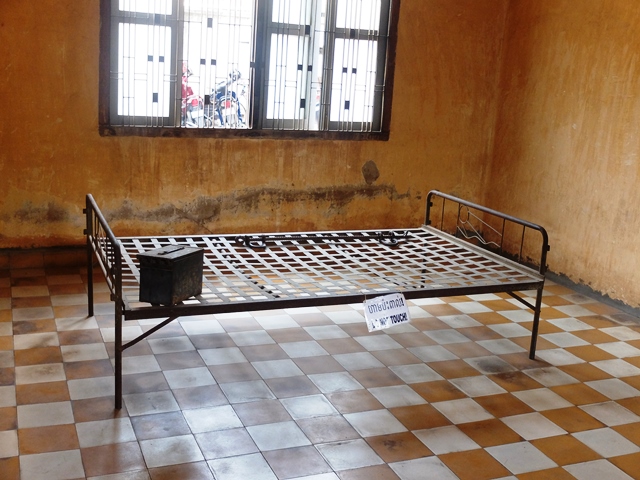
Room where interrogation and torture was conducted at Tuol Sleng.
This wasn’t one of the easiest of posts to write. I questioned my motivations for visiting these sites, the subjects of the photos I took and how to then describe what I’d seen and how I felt. Can such atrocities be understood or processed in a few hours of one sunny morning or by reading an account by a survivor? Absolutely not, but it can go a way to providing some context to better appreciate and understand the country and these people and therefore I believe should be included on a traveler’s itinerary.
*http://en.wikipedia.org/wiki/Khmer_Rouge
 Adventures in life, travel and teaching
Well written and well said. No apology is required for reminding us how recent this all was.
LikeLiked by 1 person